Introduction
Many students believe hotel management is only about cooking or working in hotels. In reality, hospitality professionals require a unique combination of technical knowledge, communication skills, leadership abilities, and customer service excellence.
Students who develop these skills early often perform better during internships, interviews, and professional careers.
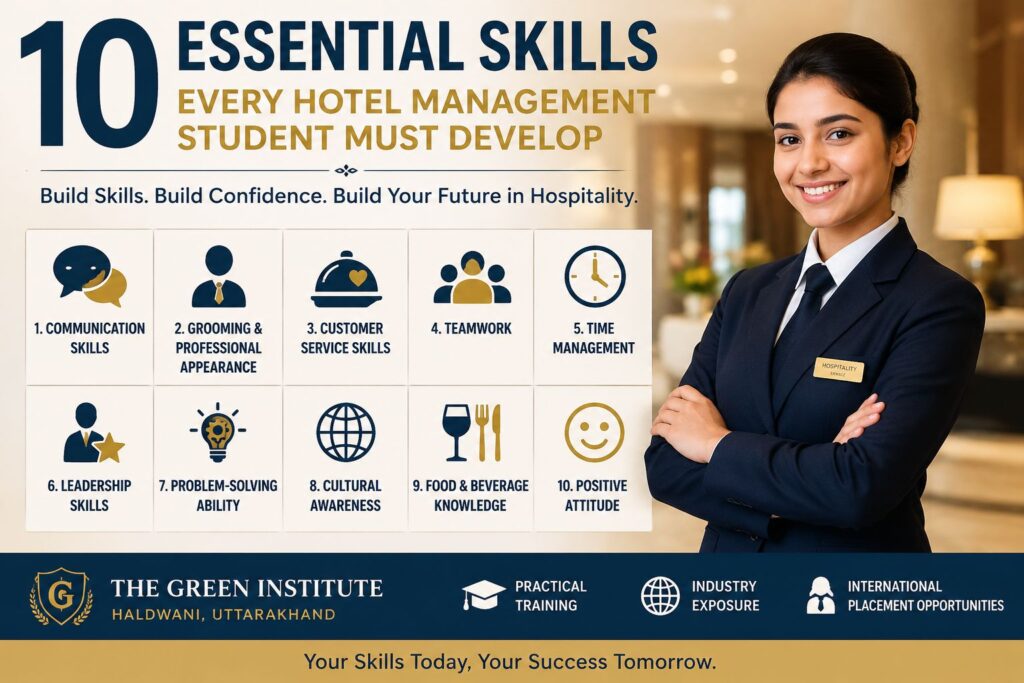
1. Communication Skills
Communication is the most important skill in hospitality.
Whether working at a hotel reception, restaurant, airline, or cruise ship, professionals interact with guests from different backgrounds every day.
Tips:
Read English newspapers
Practice speaking daily
Learn hospitality vocabulary
2. Grooming and Professional Appearance
First impressions matter.
Professional grooming reflects confidence, discipline, and respect for guests.
A hospitality professional should always maintain:
Clean uniform
Proper hairstyle
Good personal hygiene
Professional posture
3. Customer Service Skills
Guests may forget what you said, but they never forget how you made them feel.
Excellent customer service includes:
Listening carefully
Solving problems quickly
Staying calm under pressure
Being polite and respectful
4. Teamwork
Hotels operate through teamwork.
The kitchen, front office, housekeeping, and restaurant teams must work together to deliver excellent guest experiences.
Students should learn to:
Support colleagues
Communicate clearly
Respect different departments
5. Time Management
Hospitality is a fast-paced industry.
Professionals must:
Arrive on time
Complete tasks efficiently
Meet deadlines
Prioritize responsibilities
6. Leadership Skills
Leadership is not about position; it is about responsibility.
Future supervisors and managers should develop:
Decision-making ability
Problem-solving skills
Accountability
Positive attitude
7. Problem-Solving Ability
Every day in hospitality is different.
A guest complaint, delayed flight, missing reservation, or kitchen issue requires quick thinking.
Students who can solve problems calmly become valuable employees.
8. Cultural Awareness
Hospitality professionals meet guests from around the world.
Understanding different cultures helps create memorable guest experiences.
This skill is especially valuable for international careers.
9. Food and Beverage Knowledge
Even non-chef professionals should understand:
Basic food terminology
Beverage service
Restaurant operations
Guest preferences
Knowledge increases confidence and career opportunities.
10. Positive Attitude
Skills can be taught.
Attitude is a choice.
Many successful hospitality leaders started in entry-level positions but progressed through:
Hard work
Discipline
Consistency
Positive mindset
Why These Skills Matter
Employers do not only hire qualifications.
They hire people who can communicate, solve problems, work with teams, and represent the company professionally.
Students who develop these skills during their education gain a significant advantage during placements and interviews.
How The Green Institute Helps Students Develop These Skills
At The Green Institute, Haldwani, students receive practical training, personality development, communication training, industry exposure, and placement preparation to help them become hospitality professionals ready for national and international careers.